One element stops drawing its expected load.
The element is called to heat, but the electrical measurements do not show the expected response.
The operational challenge
In a busy station coffee shop, hot water supports the working day. A sudden loss can demand an urgent response at the moment the site most needs continuity.
With two elements serving a single cylinder, one element may continue heating after the other develops a problem. Some hot water can remain available, while the reduced heating capacity becomes harder to manage as demand rises.
Looking only at whether hot water is currently available can miss that change. Individual element monitoring gives the team a more useful view of what is happening.
The monitoring view
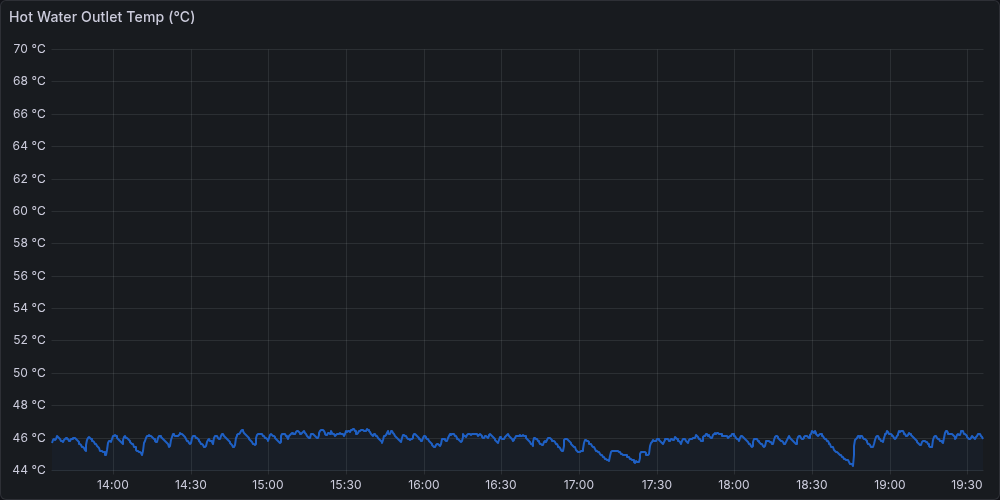
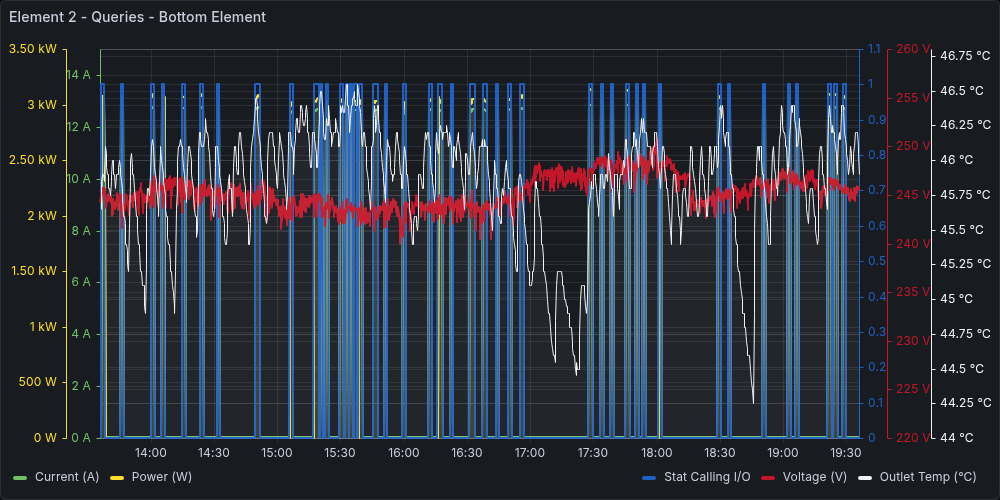
Temperature and electrical measurements provide context for maintenance decisions. These genuine Grafana snapshots show the monitoring views the team can review.
Outlet temperature across the six-hour monitoring window.
Review measured current and power alongside the thermostat call signal.
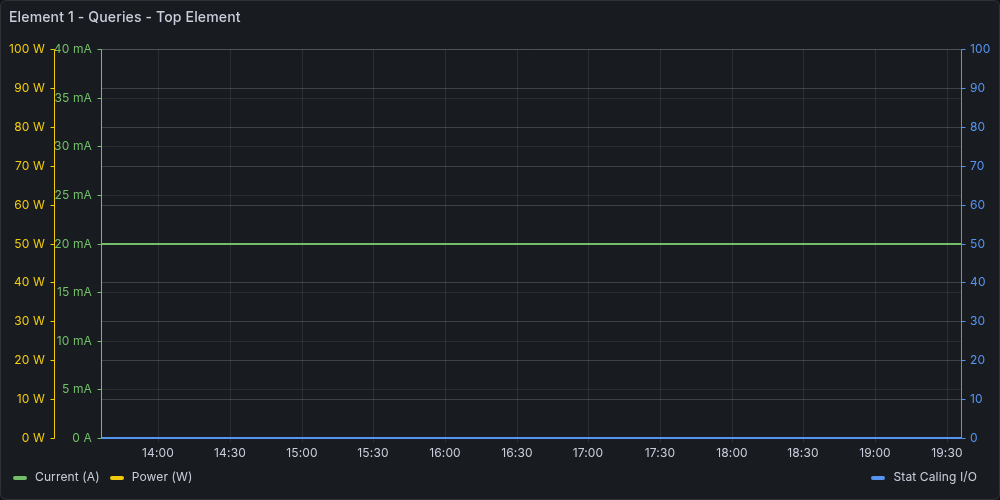
Compare the electrical measurements, thermostat call and outlet temperature over time.
How earlier awareness can help
For a cylinder like this, the value lies in understanding an individual element problem while there may still be time to respond.
The element is called to heat, but the electrical measurements do not show the expected response.
When current readings support the indication, GEMS can draw attention to that element rather than waiting for an obvious loss of hot water.
With the other element potentially still heating, maintenance can assess the issue and plan work before the remaining capacity is lost.
Illustrative maintenance response to an individual-element heating fault.
What it means for the client
The London Victoria installation shows why monitoring individual elements matters. Temperature answers one question; demand and measured load help answer the next.
Together, those views support a proactive approach: investigate the element that needs attention, prepare the visit and plan around the site’s operation. The aim is to reduce avoidable disruption through earlier information and a clearer response.
Discuss this approach for your sitesTalk to E2M about GEMS for your coffee shop, hospitality site or estate.